About HELP
A calmer answer to a difficult question.
HELP exists because the hardest moments in professional life don’t deserve improvised responses. They deserve trained ones — measured, principled, and rooted in respect for the people on every side of the room.
Three principles, applied everywhere we work.
HELP isn’t a checklist. It’s a way of carrying yourself through the work — one that scales from a single conversation to an organization-wide standard of practice.
- Empowerment over instruction
- We build judgement, not scripts. Practitioners leave able to assess, adapt, and lead — not just recite a protocol.
- Leadership at every level
- Safety isn’t owned by one role. HELP equips frontline staff, supervisors, and leadership with the same shared language and stance.
- Safety as a continuum
- Readiness is a practice, not an event. Our pathways move with your team — initial certification, refinement, refresh, and forward.
What organizations notice, and why they stay.
The reasons teams renew with HELP year after year are the same reasons they chose us in the first place.
Standards-aligned and audit-ready
HELP curricula are mapped to recognized workplace safety standards and reviewed annually, so what your team learns stands up to scrutiny.
Built on practitioner experience
Decades of fieldwork sit behind every module. Our instructors come from the professions they teach — they’ve been in the rooms our learners will be in.
Prevention-first, not reaction-first
Our approach front-loads awareness and communication. The goal is to keep most situations from ever becoming situations at all.
Outcomes you can see in the work
Confidence shows up quietly: smoother shifts, fewer incident escalations, and people who stay longer in roles that ask a lot of them.
Quiet expertise, built over decades.
HELP’s instructors and curriculum leads come from professions where steadiness matters most. The program is grounded in field experience and continually refined against current research and real practice.
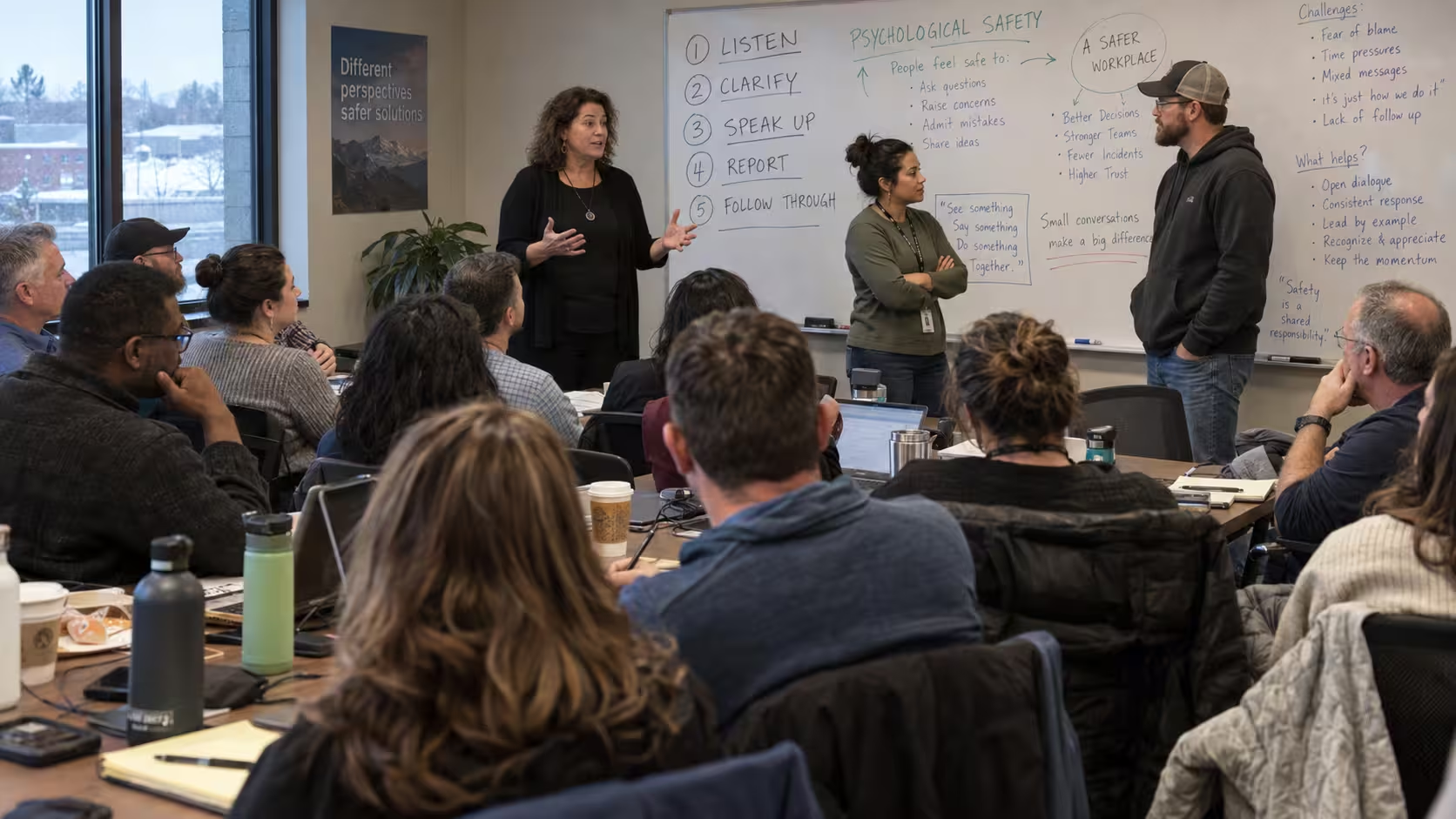
We don’t train people to handle the worst day of their career. We train them so that day looks a lot more like every other day — orderly, principled, and survivable for everyone involved.
HELP is a program of CAPS — Crisis Assessment and Prevention Systems.